
Domestic Road Transport in Türkiye 2026: FTL, LTL and Trucking from One Source
Your shipment does not end at the bonded warehouse in Istanbul. For shippers in Europe, that is often where the least visible part of the supply chain begins — and where the most time and money is lost: the leg inside Türkiye, all the way to your customer's gate.
Key points
Around 89% of Türkiye's domestic freight moves by road (tonne-kilometres, 2017 figures, Çevresel Göstergeler).
In 2025, Turkish ports handled around 14 million TEU (+3.5%) — every one of those containers continues on wheels once it leaves the port.
Total port throughput reached 553.3 million tonnes (+4%). Domestic truck capacity is no longer a side issue; it is the bottleneck of the chain.
The carrier's free time, demurrage and port storage charges run independently of the freight rate — and they are missing from many budgets.
aktif trans handles domestic transport across Türkiye with its own fleet: FTL, LTL and trucking.
Why the domestic leg decides your delivery time in 2026
Domestic transport covers every movement of your goods inside Türkiye: from the port to the bonded warehouse, from the bonded warehouse to the dealer, from the regional warehouse to the end customer. Shippers delivering from Europe into Türkiye often treat these legs as a detail in the shadow of the international freight. In practice they account for a large share of the total transit time — and of the surprise costs.
Finding a vehicle is rarely the problem. The problem is that the international and the domestic leg meet in the same calendar. When two service providers have to notify each other, delivery on the morning after customs clearance becomes a matter of luck. With both in one pair of hands, it becomes plannable.
Road carries Türkiye's domestic traffic
Despite investment in rail and sea, almost all of Türkiye's domestic freight moves by road. In foreign trade, road carried 26.4% of exports and imports by value and 11.41% by weight in 2025 — 31.6 million tonnes of exports and 17.5 million tonnes of imports (UTİKAD Logistics Sector Report 2025). A low share by weight alongside a high share by value means one thing: high-value, time-critical goods travel by road. And they do not stop at the border crossing.
Where international transport meets domestic traffic
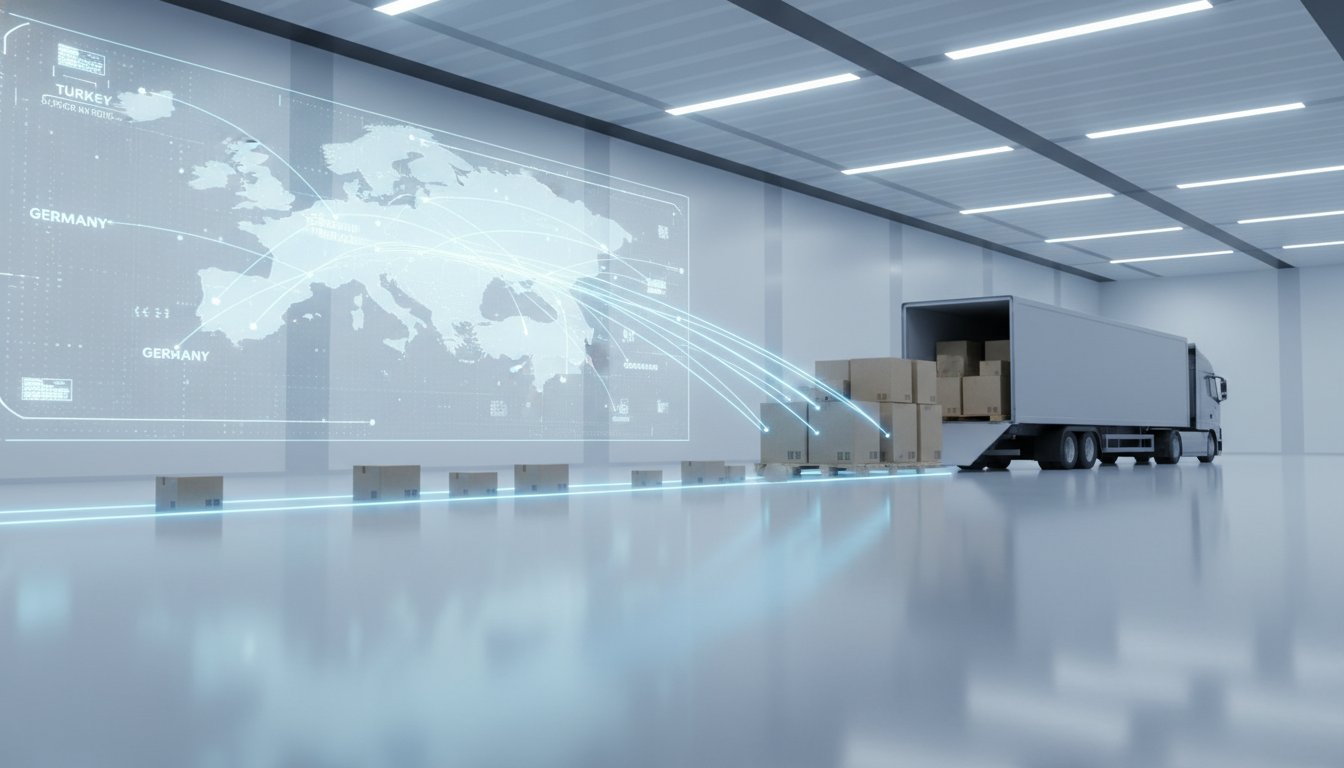
On the Germany–Türkiye and Italy–Türkiye axes we run part and full loads on fixed weekly departures, and until now we delivered as far as the bonded warehouse in Istanbul. For years our customers asked the same question: can you also take the leg after that? Our domestic services close exactly that gap — across Türkiye, with our own fleet and one contact from loading in Europe to delivery in Türkiye.
FTL — full truckload
With FTL the vehicle is reserved exclusively for one customer: one loading, one unloading, no handling in between, the shortest transit time. The right choice when your volume fills a truck or when the goods must not be transhipped.
Exclusive trailer, direct delivery
Curtainsider, mega and temperature-controlled trailers
Delivery from factory, bonded warehouse and free zone
Across Türkiye with our own fleet
LTL — part load
With LTL several customers share one vehicle. Consignments are consolidated at a hub and distributed regionally. For smaller quantities the cost drops considerably — in return you accept one handling and a little more transit time. You pay only for the loading space you actually use.
In practice most companies need both: full loads for dealers and key accounts, part loads for retail. Running both in the same network lets us combine return loads internally and cut empty kilometres — and that saving shows up in the price.
Billed on the loading space used
Regional collection and distribution network
Milk-run collection for inbound supply
Full and part loads in the same network, with the same contact
Trucking — container haulage, port and terminal transfers
Trucking is the leg that takes a container from the vessel to the consignee: collection at the port, carriage to the bonded warehouse or the customs zone, and return of the empty container to the depot. On export the same chain runs in reverse.
Keeping free time and storage charges under control
What usually drives up the bill for a port container is not the freight, but the standing time. Once the carrier's free time has expired, demurrage applies, plus port storage for every day on the terminal. Both are the direct result of collection planning: if the customs declaration, the slot and the unloading capacity do not fall on the same day, the cost grows by itself. That is why we plan collection not after clearance, but as part of it.
Container or trailer?
Staying on the container makes sense when the goods arrived by sea and continue in the same box: no handling, lower risk of damage, the seal intact. The price: the container belongs to the carrier, and the clock is running. On a trailer, by contrast, the goods are independent of the container — the box goes straight back and the demurrage risk disappears. The price: one handling at the port. The decision comes down to a single question: is the free time longer or shorter than the domestic running time? We do that calculation again for every shipment.
Inbound and distribution logistics
The second half of domestic transport has nothing to do with the port: collecting material for production and distributing finished goods into the market. The two flows are often run by different departments with different service providers — with the result that two vehicles run the same route and two come back empty. With milk-run tours we collect small quantities from several suppliers on one fixed route; in distribution we combine full and part loads so that the delivery vehicle loads again on its way back.
Five criteria for choosing your domestic partner in Türkiye
Licence and insurance: ask to see the domestic transport licence and the valid carrier's liability cover in writing.
Own fleet or subcontractor chain: with an own fleet, changes of plan are decided in one place.
Range of equipment: curtainsider, reefer and mega trailers plus container chassis from one source mean flexibility.
Port experience: slot systems, storage charges and free time are a matter of experience.
Continuity with the international leg: when everything is held in one file, no information is lost.
Your supply chain under one roof
Leaving the domestic leg to a separate provider means building an extra interface into the most sensitive point of the chain. Alongside our fixed departures on the Germany–Türkiye and Italy–Türkiye axes, we now add FTL, LTL and trucking inside Türkiye. Talk to us — we will show you exactly which leg will save you days and cost.
aktif trans – complexity, simplified.
Frequently asked questions
How do I choose between FTL and LTL for domestic transport?
What matters is not the weight but the space the goods occupy in the vehicle, and how time-critical they are. If they fill a vehicle or must not be transhipped, FTL is right. For small quantities LTL is considerably cheaper — with one handling and a slightly longer transit time.
Why should a port container be collected before free time expires?
Once free time has expired, the carrier charges demurrage and the port charges storage for every day on the terminal. Both items are independent of the freight rate and grow quickly. Collection therefore belongs inside the clearance process, not after it.
What is the benefit of giving international and domestic transport to the same partner?
No information is lost: the release time from customs sits directly with the team planning the domestic truck. On top of that comes directional balance — collecting and distributing in the same network cuts empty kilometres, and that is passed on in the price.
Sources
Çevre ve Şehircilik Bakanlığı, Çevresel Göstergeler: road share of domestic freight 89.2% (tonne-kilometres, 2017).
UTİKAD Lojistik Sektörü Raporu 2025: around 14 million TEU of container throughput in Turkish ports (+3.5%), road share in foreign trade 26.4% by value and 11.41% by weight, 31.6 million tonnes of exports and 17.5 million tonnes of imports.
T.C. Ulaştırma ve Altyapı Bakanlığı: 553.3 million tonnes of port throughput in 2025 (+4%).

Comments